
INTEGRATED CULTURAL DUE DILIGENCE
Not alongside the numbers; we're going through them.
Regular due diligence separates financial from cultural. We integrate them. By analyzing economic structures and cultural dynamics together, it becomes clear what superficial due diligence misses: the real risks and opportunities behind a transaction.
THE PROBLEM
Superficial observation costs capital.
About 70% of mergers and acquisitions fail to deliver the intended value. This isn't because the numbers were incorrect, but because financial and cultural analyses remained separate. Financial due diligence without cultural context misses why the numbers are what they are. Cultural diversity and inclusion without an economic foundation remains superficial.
The real risks lie in the interaction: how decision-making culture causes financial patterns, how leadership style sustains cost structures, how conflict avoidance distorts investment decisions. Only when you make those connections visible does an analysis emerge on which you can base decisions.
"This holds true if we accept this" — not "this is the truth." Transparency in assumptions is the core of reliable analysis.
THE FRAMEWORK
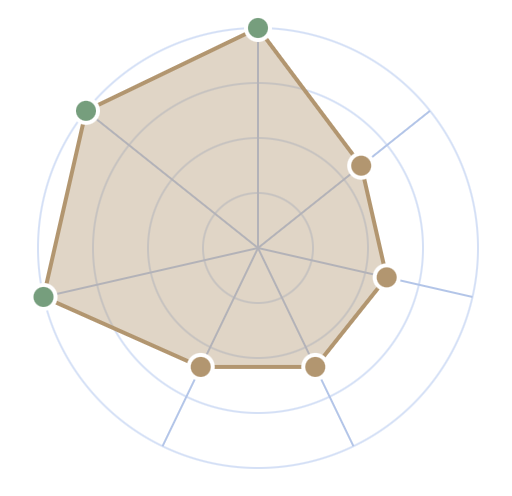
Seven axes, three overlays, total integration
Orbit uses a structured 7-axis analysis framework. Each axis is evaluated on subdomains with evidence-based scoring. On top of that, three overlays are applied to place each finding in context.
Economic Viability
Financial structures, cost compositions
Strategic Positioning
Market position, competitive advantage
Operational Integrity
Process maturity, operational efficiency
Governance & Compliance
Governance structure, regulations, risk management
Human Capital
Talent, leadership, organizational capacity
Technology & Innovation
Tech stack, IP, digital maturity
Stakeholder & Market
Customer portfolio, supplier dependency
Culture Overlay (COL)
Hofstede + Meyer dimensions, applied as a delta analysis. Reveals how cultural differences influence the findings.
Organizational Dynamics (ODO)
Six dynamic indices with sector baselines. Places organizational behavior in context with each finding.
Semantic Economic Model (SEM)
Hierarchical metrics structure that analyzes financial values with explicit assumptions and source references.
PLATFORM
Orbit — where analysis takes shape
All analyses are conducted in Orbit, our proprietary due diligence platform. Evidence-based, AI-supported, fully traceable. Here's an overview of the workspace.
DELIVERABLES
What it delivers
Integrated risk profile
7-axis analysis with cultural and economic overlays, RAG classification per subdomain, and complete source traceability. Ready to use in the deal room.
Integration roadmap
Concrete steps for cultural and operational integration, prioritized using the Action Priority Matrix based on impact and effort.
Economic composition
SEM analysis with transparent assumptions, source citations, and calculated ratios. It makes the financial reality behind the numbers visible and verifiable.
FOR WHOM
Dealmakers who want to look deeper
- Private Equity-firms those portfolio companies integrate and want to protect value.
- Corporate M&A-teams who want to reduce the risk of integration failure.
- Executives during mergers who need to guide their teams through transitions.
- International organizations where cultural complexity increases exponentially.
Our ICDD methodology can be used in multiple languages (Dutch, English, German) and is available through an international network of qualified consultants.